I have just finished watching a wonderful TV show called "The Inside" from 2005. There are only 13 episodes, and it was cancelled. We have a podcast called "Profiling Criminal Minds" - a meta discussion of the TV show, Criminal Minds. Between our analysis of Season 5 & 6, we discuss "The Inside" to put Season 6 into perspective. Yesterday, we finished creating the bonus 7-part mini-series that discusses "The Inside". It will begin to air in September alongside our weekly podcasts.
To get it out of my head, I decided to write this blog post - I do have to do other work completely divorced from this topic!
Everyone who is interested in issues of the long-term impact of child abuse should watch this series. It contains a brilliant character study of the main character - a woman who is working in the FBI as a profiler in the Violent Crimes Unit in Las Angeles. She was kidnapped at age 10, and escaped her kidnapper 18 months later. Created by Tim Minear and Howard Gordon, I was stunned by its focus and its character creations. Not that I should have been surprised given the creators. My podcast co-host had been raving about this show for ages, and he was right.
I won't go into details, but it rang true to me. There were many difficult moments in the episodes as Rebecca's story and life unfolds. As a survivor I recognized, empathized with and had some difficult moments with the content. You can hear my reactions if you wish to listen to the podcast later this year. It certainly made me have more than a few mini-reflections on my past - even though the situations (with which readers of the blog are familiar) were different. Even my co-host had moments of reflection on his past - and that almost never happens.
Kudos to Minear and Gordon and all the writers, directors, actors etc. on the show.
And many thanks to Chris from England for putting this playlist together, I assume that he taped them from ITV4 mainly. It is the only way to get them - they aren't available on DVD. Just a note: Episodes 4 and 5 are out of order on the Youtube playlist - you should watch Pre-filer before you watch Loneliest Number.
And here is the link for the playlist:
https://www.youtube.com/playlist?list=PLG5YX8k3vkx5nb9R2ljthjsmq79JRFYMx
I should note that this is a very dark television show, as I say in the first podcast. I am not surprised that it was cancelled. It is harder to watch than anything else on the subject. It handles difficult issues with a tightness of control that is seldom seen in television. I have no idea how we are going to go back to Criminal Minds after watching this - but we will - we committed ourselves to talk about the entire show, and we will.
Showing posts with label child sexual abuse. Show all posts
Showing posts with label child sexual abuse. Show all posts
Sunday, 26 May 2019


Monday, 12 November 2018
I Told You So!! And the schism continues to grow
And if you hadn't read my blog, well, you can always start to read it now.
Everyone was so sure that Pope Francis was just the best thing in the world.
The best that I could do was tell my friends that I will give him the benefit of the doubt - but I didn't believe for a second that things would be different. Like John Paul 2, Pope Francis' change is paper thin.
I'll bet between his bouts of tears (which I do think he sheds), Ratzinger (Benedict 16) thinks about how glad he is that he retired.
The one thing that I can say is that the Vatican has just the "Best-ever" window dressers.
Saturday, 28 September 2013
So Satisfying
The second last episode of Ray Donovan and Ray killed the priest.
I'm with Bunchie(y?): "I'm glad you did it, I didn't think I would be, but I am."
It was a brilliant episode. Just watched the last 10 minutes again. Kudos to the writer Ron Nyswaner, the director Daniel Minahan & the creator Ann Biderman. Liev Schreiber is brilliant as always.
I will be writing about the show as a whole when I have watched the last episode. After reading a few critics, I think that there is a need to thoroughly digest and expound upon it. It just rings true on many levels for me.
So much of what I have commented on in earlier posts are reflected in this story line. See, for example, They Still Call Him "Father". The Power of the Belief System or Anger, Anger, and Rage. They both contain aspects of impact/response that make me feel very comfortable watching this show.
I will be watching the last episode shortly & will hope that it is a fitting end to the first season!
I'm with Bunchie(y?): "I'm glad you did it, I didn't think I would be, but I am."
It was a brilliant episode. Just watched the last 10 minutes again. Kudos to the writer Ron Nyswaner, the director Daniel Minahan & the creator Ann Biderman. Liev Schreiber is brilliant as always.
I will be writing about the show as a whole when I have watched the last episode. After reading a few critics, I think that there is a need to thoroughly digest and expound upon it. It just rings true on many levels for me.
So much of what I have commented on in earlier posts are reflected in this story line. See, for example, They Still Call Him "Father". The Power of the Belief System or Anger, Anger, and Rage. They both contain aspects of impact/response that make me feel very comfortable watching this show.
I will be watching the last episode shortly & will hope that it is a fitting end to the first season!
Tuesday, 10 September 2013
Poor, poor Richard - well there goes his credibility
http://www.salon.com/2013/09/10/richard_dawkins_defends_mild_pedophilia_says_it_does_not_cause_lasting_harm/
So Dawkins is not the great analytical thinker that he wants us and everyone around him to believe.
Has he never ever questioned by he is so evangelical about the horrors of "the God Delusion" as he calls it?
Obviously not. Do do so would take him back to "what didn;t really hurt him at all".
The fact that he is now focusing on it is amazing - he obviously can't let it go - a little mild form of PSTD, Richard?
Here is my post from another blog & and an earlier blog post on Dawkins - the first time he "admitted" that he had been abused sexually as a child at school.
So Dawkins is not the great analytical thinker that he wants us and everyone around him to believe.
Has he never ever questioned by he is so evangelical about the horrors of "the God Delusion" as he calls it?
Obviously not. Do do so would take him back to "what didn;t really hurt him at all".
The fact that he is now focusing on it is amazing - he obviously can't let it go - a little mild form of PSTD, Richard?
Here is my post from another blog & and an earlier blog post on Dawkins - the first time he "admitted" that he had been abused sexually as a child at school.
WEDNESDAY, MAY 20, 2009
What Dawkins Doesn't Understand
Today I am going to write about the one thing that bothers me about Richard Dawkins' The God Delusion. I loved the book but if he needs to truly argue that religion is child abuse, then he cannot so blithely dismiss the impact of sexual abuse on children raised in Christian environments.
The absolute power of the Christian god is embedded in Christian children from their birth. Whatever that particular god structure is, it is consistently reinforced by their parents, their church communities and sometimes their school systems.
Dawkins wouldn't disagree with this, but when he uses an example of a one time experience of sexual assault by a priest (described as "yukky" by the woman recounting it) to point out that psychological damage is far more damaging, he is does a massive disservice not only to those abused in a Christian context but, of all things, to his own argument that religion is child abuse. Dawkins just doesn't really get it when it comes to the impact of sexual abuse of children in a religious context. Perhaps he needs to see Deliver Us From Evil (http://www.deliverusfromevilthemovie.com/index_flash.php). Or perhaps he needs to read Our Fathers: The Secret Life of the Catholic Church in an Age of Scandal by David France. He migh then get some idea, albeit secondhand of just what kind of damage the combination of religion and sexual abuse can cause.
There are two possible reasons for his dismissal. The first is that that it never really happened to him and he is therefore making a false generalization from his own experience and people who have had "minimal" experience of sexual abuse (these do exist - and it is a far cry from what I and millions of other children were subjected to). He quite clearly does not know anyone who has been devastated by the sexual abuse which includes all of the other forms of abuse that can knowingly be inflicted on children. The second possibility is that perhaps it did happen to him and he has never had to look at it. In other words, he has successfully managed to live a life without running into a situation that will cause him to have flashback or emotional crisis.
The absolute power of the Christian god is embedded in Christian children from their birth. Whatever that particular god structure is, it is consistently reinforced by their parents, their church communities and sometimes their school systems.
Dawkins wouldn't disagree with this, but when he uses an example of a one time experience of sexual assault by a priest (described as "yukky" by the woman recounting it) to point out that psychological damage is far more damaging, he is does a massive disservice not only to those abused in a Christian context but, of all things, to his own argument that religion is child abuse. Dawkins just doesn't really get it when it comes to the impact of sexual abuse of children in a religious context. Perhaps he needs to see Deliver Us From Evil (http://www.deliverusfromevilthemovie.com/index_flash.php). Or perhaps he needs to read Our Fathers: The Secret Life of the Catholic Church in an Age of Scandal by David France. He migh then get some idea, albeit secondhand of just what kind of damage the combination of religion and sexual abuse can cause.
There are two possible reasons for his dismissal. The first is that that it never really happened to him and he is therefore making a false generalization from his own experience and people who have had "minimal" experience of sexual abuse (these do exist - and it is a far cry from what I and millions of other children were subjected to). He quite clearly does not know anyone who has been devastated by the sexual abuse which includes all of the other forms of abuse that can knowingly be inflicted on children. The second possibility is that perhaps it did happen to him and he has never had to look at it. In other words, he has successfully managed to live a life without running into a situation that will cause him to have flashback or emotional crisis.
Monday, 8 July 2013
Ray Donovan: In Canada, it's on The Movie Network
And here is the link:
http://www.themovienetwork.ca/series/raydonovan
I have looked at a couple of reviews and some of the official website material. There will be a lot to write about. I am not sure that some of the reviewers/bloggers are actually understanding the characters. However, that is to be expected.
One blogger seems to think that the show is a bit "fantastical" in that no one could get away with what he does. While the stars' cases are handled quickly, I might suggest that people go and read up on Pellicano and then decide whether someone could "get away" with being like Ray.
According to Wikipedia, "Pellicano is known to have represented Anthony "the Ant" Spilotro, the Chicago mobster charged with monitoring the Las Vegas casino "skim" for the Chicago mob. Gustave Reininger, the co-creator of NBC's acclaimed television drama Crime Story, was served both a subpoena and a warning from Spilotro through Pellicano.[23][24][25][26][27][28][29]. "
Note: Crime Story was on TV from 1986-1988. If anyone is interested, here is the link to the Vanity Fair article, "The Pellicano Brief". It seems Pellicano's rise to fame started in 1977. Took them until 2006 to indict him - rather a long run and far from fantastical.
The writing in Ray Donovan is solid - may not be pleasant but it promises to be very interesting.
http://www.themovienetwork.ca/series/raydonovan
I have looked at a couple of reviews and some of the official website material. There will be a lot to write about. I am not sure that some of the reviewers/bloggers are actually understanding the characters. However, that is to be expected.
One blogger seems to think that the show is a bit "fantastical" in that no one could get away with what he does. While the stars' cases are handled quickly, I might suggest that people go and read up on Pellicano and then decide whether someone could "get away" with being like Ray.
According to Wikipedia, "Pellicano is known to have represented Anthony "the Ant" Spilotro, the Chicago mobster charged with monitoring the Las Vegas casino "skim" for the Chicago mob. Gustave Reininger, the co-creator of NBC's acclaimed television drama Crime Story, was served both a subpoena and a warning from Spilotro through Pellicano.[23][24][25][26][27][28][29]. "
Note: Crime Story was on TV from 1986-1988. If anyone is interested, here is the link to the Vanity Fair article, "The Pellicano Brief". It seems Pellicano's rise to fame started in 1977. Took them until 2006 to indict him - rather a long run and far from fantastical.
The writing in Ray Donovan is solid - may not be pleasant but it promises to be very interesting.
Sunday, 7 July 2013
Ray Donovan: Showtime, Sunday nights at 10
Finally, a series about the longterm negative impacts of child sexual abuse by Roman Catholic priests.
See it on Showtime - in the States, the first episode is on-line at http://www.sho.com/sho/ray-donovan/home
I don't know if it will be on Netflicks - or other carriers, but a full season has already been shot.
I was excited in the first 15 minutes and blown away by the end of it. I had to sit on my hands to keep myself from calling people late at night to tell them to find some way to watch it.
I assume that the inspiration for the story's setting was Anthony Pellicano, private investigator to the stars. See the LA Times for stories about his trial.
We have two brothers (of 4) that we know were sexually abused by a priest (whom their father kills when he gets out of jail). The one is an addict (in & out of rehab) who has had a settlement - & is still drinking etc. - & Ray Donovan - although he has apparently never told anyone - & suffers from flashbacks. There is also a sister who was an addict and committed suicide. All of this is the underbelly of the lives of Ray Donovan and his family.
Just a note: the level of violence in the show is limited but extreme.
Looking forward to tonight's episode & will probably write reviews of the show at some point in the future - probably when it has aired all of the first season.
As an aside, it is wonderful to see Liev Schreiber, and Jon Voigt is suitably creepy as Ray's father. There was a wonderful cameo (maybe he will be on again, fingers crossed) by Elliot Gould as Ray's boss and mentor.
See it on Showtime - in the States, the first episode is on-line at http://www.sho.com/sho/ray-donovan/home
I don't know if it will be on Netflicks - or other carriers, but a full season has already been shot.
I was excited in the first 15 minutes and blown away by the end of it. I had to sit on my hands to keep myself from calling people late at night to tell them to find some way to watch it.
I assume that the inspiration for the story's setting was Anthony Pellicano, private investigator to the stars. See the LA Times for stories about his trial.
We have two brothers (of 4) that we know were sexually abused by a priest (whom their father kills when he gets out of jail). The one is an addict (in & out of rehab) who has had a settlement - & is still drinking etc. - & Ray Donovan - although he has apparently never told anyone - & suffers from flashbacks. There is also a sister who was an addict and committed suicide. All of this is the underbelly of the lives of Ray Donovan and his family.
Just a note: the level of violence in the show is limited but extreme.
Looking forward to tonight's episode & will probably write reviews of the show at some point in the future - probably when it has aired all of the first season.
As an aside, it is wonderful to see Liev Schreiber, and Jon Voigt is suitably creepy as Ray's father. There was a wonderful cameo (maybe he will be on again, fingers crossed) by Elliot Gould as Ray's boss and mentor.
Sunday, 17 March 2013
The Slacktivist Does It Again
Fred Clark is an amazing and succinct writer.
Just in case readers think that I only care about hypocrisy in the Roman Catholic Church, Fred manages to take care of evangelical, fundamentalist hypocrisy and idiocy quite well. He could definitely label some of his posts.: "Just what is the colour (without the "u" of course) of the sky in their world".
Might I suggest that people read two of his recent posts.
The first: "It's not your 'stance', but who you're standing with". This is Fred's commentary on the sexual abuse of children in evangelical circles. His main point is as follows:
The second: "Christian college fires woman for not getting abortion". The woman was only engaged when she became pregnant. The amazing part of this story is that the college then apparently offered the job to her fiancé. He didn't take it, but honestly! Read on!
The Slacktivist is on My Blog List in case you have trouble with links.
Just in case readers think that I only care about hypocrisy in the Roman Catholic Church, Fred manages to take care of evangelical, fundamentalist hypocrisy and idiocy quite well. He could definitely label some of his posts.: "Just what is the colour (without the "u" of course) of the sky in their world".
Might I suggest that people read two of his recent posts.
The first: "It's not your 'stance', but who you're standing with". This is Fred's commentary on the sexual abuse of children in evangelical circles. His main point is as follows:
The problem with Challies' response is not his "stance," but that he's standing in the wrong place, standing by the wrong people, standing on the wrong side. His allegiance is cast with the institution, not with the vulnerable.
The Slacktivist is on My Blog List in case you have trouble with links.
Tuesday, 26 February 2013
If you read French, this is a MUST read
Autrement que victimes : Dieu, enfer et résistance chez les victimes d'abus sexuels (Not just victims: God, anger and resistance in the voices of sexual abuse victims)
Authors: Jean-Guy Nadeau Carole Golding Claude Rochon
Publisher: Novalis
Date: 2013
http://www.novalis.ca/Product.aspx?ids=7532038
The publisher's blurb in French. I have done a broad translation of the French (I hope the authors aren't too upset by my paraphrasing at points but I think that I have retained the essence of the blurb.)
Fruit d'un travail de plusieurs années, cet ouvrage offre aux différents intervenants psychosociaux des informations qui leur permettront de mieux travailler avec les croyances religieuses de leurs patients et de les intégrer dans leur thérapie. Si des victimes trouvent dans la foi ou dans la religion un soutien pour survivre à l'abus, d'autres assimilent ce drame à un abandon ou à l'opprobre de Dieu ; elles se sentent alors davantage coupables, ressentent un sentiment d'exclusion, bref tardent à sortir de leur traumatisme. Enfin, les enfants éduqués chrétiennement vivent très tôt, et avec peu de ressources, l'expérience douloureuse des questions radicales sur les relations entre Dieu, la souffrance et le mal. De nombreux témoignages viennent illustrer ces positions et enrichir la réflexion par des cas concrets.
The fruit of many years of labour, this book offers much information for psychosocial counsellors that will allow them to work more effectively with the religious beliefs of their patients and to integrate these beliefs into their clients’ therapy. Some victims find in their faith or their religion a support that helps them to survive the abuse. Other victims describe their response to this abuse as abandonment by God or as contempt for God; they then feel more guilty, and also feel excluded from the belief system. In short, they take a long time to resolve the issues raised by their traumatic experience. Lastly, with few resources, children who are educated (raised) as Christians live from a very early age with the painful experience of facing radical questions on the relationship between God, suffering and evil. The book contains many firsthand examples that illustrate these issues and the discussion is enriched with these concrete cases.
I have only started to read the book and after reading different chapters and sections, I already feel that it is definitely a wonderful addition to the literature on the impact of the Christian belief system on victims of child sexual abuse within that system. This is not just because they have a lengthy discussion of my Psalm and Eulogy (pp. 104-118) - guess I am a the*logian, whether I like it or not. It is well balanced between those who, like me, felt abandoned and angry at the failure of the belief system to address our needs and those who have found support in the system.
The authors should be looking for a publisher for an English translation so that it can reach a wider audience.
I will comment further after I have finished the entire book. (After all, French isn't my first language and it takes more time to integrate what I am reading!)
Sunday, 4 November 2012
Fear and Denial at the Crossroads.
So I decided that I might as well put up the other paper that I delivered this year. This is the document that will be published in the Proceedings of the Annual Meeting of the Canadian Society of Church History 2012. It is unedited so any problems with editing issues are solely my responsibility and will be fixed for the final version. However, I just thought that it might as well be out there. My 1993 paper has already had 234 views since I uploaded it in May. It will be interesting to see if this one is viewed as well.
http://www.academicroom.com/conferencepaper/fear-and-denial-crossroads-where-history-%E2%80%9Cchild-abuse-scandal%E2%80%9D-within-roman-catholic-church
http://www.academicroom.com/conferencepaper/fear-and-denial-crossroads-where-history-%E2%80%9Cchild-abuse-scandal%E2%80%9D-within-roman-catholic-church
Sunday, 13 May 2012
Just what is the colour of the sky in their world, part 2
Setting the Stage:
A Report on the Crisis in the Catholic Church in the United States The National Review Board for the Protection of Children and Young People Established by the United States Conference of Catholic Bishops. February 27, 2004
I will be doing a far more in depth analysis of the John Jay Reports at some point in the future but I wanted to make note of something that sets the stage for understanding so much about what has gone wrong & is going wrong with the RCC institutional response to their "pedophilia crisis". The following is an excerpt from the Report on the Crisis in the Catholic Church in the United States:
To understand the purpose and scope of the Report, it is helpful to emphasize what it is not. First, this Report is not intended to address Church doctrine or to serve as a sounding boards for those within the Church and outside the Church who wish to use this scandal to accomplish objectives unrelated to or tangential to the goal set forth above. The problem facing the Church was not caused by Church doctrine, and the solution does not lie in questioning doctrine. Second, this Report does not address specific instances of clerical sexual abuse or inadequate episcopal response. ... it is not the purpose of the Report to determine whether an individual priest or bishop was responsible for a specific act or omission. Finally, this Report is not, an does not purport to be, a scientific exercise. With the exception of the analysis of the John Jay College study, ... the Report does not rely upon the scientific method. Thus, for example, the Board has not attempted to conduct a comprehensive analysis of factors that may have made sexual abuse of minors more or less likely in a particular environment, or to develop an empirically-based profile of a typical sexual abuse offender.
However, the Board is confident that it has accurately placed in context the reasons for the current crisis. (pp. 7-8)
There you have it. The parameters of the report. It speaks for itself. I'll give them #2 but honestly, do they expect anyone to believe that they can "accurately place in context the reasons for the current crisis" with those parameters. It is no wonder that Robert S. Bennett, the Research Committee Chair, washed his hands of the whole mess.
A First Look at The John Jay Reports
1. The Nature and Scope of the Problem of Sexual Abuse of Minors by Catholic Priests and Deacons in the United States. A Research Study Conducted by the John Jay College of Criminal Justice
2. The Causes and Context of Sexual Abuse of Minors by Catholic Priests in the United States, 1950-2010. A Report Presented to the United States Conference of Catholic Bishops by the John Jay College Research Team
First things, first. It should also be noted that although the Causes and Context Report (C&C) says 1950 -2010, all the graphs and statistics end as of 2002 with a couple of paragraphs & 3 graphs to cover to 2008: pp.32-33).
It would be interesting to do a comparison of the earlier "Nature & Scope" with this one - there are some changes in how the data is reported. Just one example: compare the Tables 4.4.5 & 4.4.6 (p.76) of the Nature & Scope report to Table 5.7 (p. 112 where the 2 previous tables are collapsed into 1)) of the Causes & Context report. The initial report (N&S) shows the gifts & enticements offered to victims in a raw count and as a percentage of incidents, while in C&C it is broken down into % of male victims & % of female victims. The C&C table makes it look far less of an issue - let's look at alcohol/drugs - In the N&S the table reads 712 count or 38.8% of 1,834 incidents. In the C&C table, it is now listed as 8.6% of males and 1.2% of females were offered alcohol and/or drugs - not so bad now, is it!
What is more egregious is the missing N&S tables in the C&C report. These are the tables (pp. 73-75) 4.4.1: Alleged Acts of Abuse by Gender; 4.4.3 Threats by Victim's Gender and 4.4.4 Type of Threats by Victim's Gender. These tables all discuss the true nature of what these priests did to their victims, 4.4.1 being the one that would truly upset the apple cart in a report that essentially would like to suggest that it really wasn't all that bad & besides it's getting better. Clearly, no one needs to be told about oral sex, manual penetration, penile penetration or group or coerced sex Time to do my own blog on the report, I guess, even if it is a year later.
One sees the mighty hand of the Roman Catholic editors in the construction of the C&C report.
I seem to remember that when the initial Nature and Scope Report came out, it was really impossible to find. I had been reading references to it - it was talked about on the John Jay website, for example, but no links. At one point, it was up on the USCCB website and then I couldn't find it again - might have been my search engine :-). Anyway, I now have 2 copies of it, plus the Causes and Context Report.
A worthless and dangerous report
http://mirandaceleste.net/2011/05/24/a-worthless-and-dangerous-report/?blogsub=confirming#blog_subscription-3
A good analysis/critique of the John Jay Report commissioned by the NCCB in the US. I will do my own post on this some time but this is a really good place to start for those who are interested.
A good analysis/critique of the John Jay Report commissioned by the NCCB in the US. I will do my own post on this some time but this is a really good place to start for those who are interested.
Monday, 16 April 2012
Book Review: Sexual Abuse and the Culture of Catholicism: How Priests and Nuns Become Perpetrators
Author: Myra L. Hidalgo
Publication details: NY: The Haworth Maltreatment & Trauma Press: 2007
I'll begin by saying that the book is a good place to start for anyone trying to come to grips with the issue of sexual abuse of children within the Roman Catholic church, with some caveats.
The Positive
Chapter 5: "Systemic Sexual Shame and Catholicism" This is probably the best reason to read this book. Years ago, I made an off the cuff statement that Roman Catholicism causes an obsession with sex right from a child's earliest awareness. When questioned [after all, it wasn't a popular statement to make :-)], my explanation was - all you have to do is look at the "Virgin" Mary.
The problem is of course that so much of the analysis is based on limited data. One can never make definitive statements based on such small populations. Since 2007, there have been more and more research done around priest offenders. I will discuss some of it in later blogs. However, the chapter is the first that I have read that actually looks at "passive sexual abuse trauma" in the context of the Roman Catholic church. Bravo for that!
The Caveats
One, one must be careful of her prevalence statistics. I'm not sure that they will be found to be all that wrong in the long run - but the information that she basis her prevalence stats on is limited - something that she does acknowledge. One of the things that this book adds to the discussion is the attempt to look at prevalence comparatively, using limited data. This is not easy since there are few surveys and studies out there that does this. She compares Roman Catholic clergy to Protestant clergy, educators (psychology professors), and therapists. As always, it should be noted that these numbers only reflect those who have been "caught". Her numbers are startling - for the population in general, RC clergy are almost 4 times more likely than the general population in the US to abuse children - there are no stats for RC sexual abuse of adults. However, the group that she doesn't include are elementary and high school statistics - they do exist and are relevant to the issue since the commonality - access to children - between the groups is clear. The comparison between Protestant clergy and Roman Catholic clergy is also interesting - in the statistics that she depends, there are no sexual of children by Protestant clergy, although there is plenty of inappropriate peer related sexual contact. But Protestant clergy do sexually abuse children and adolescents - but most of it is anecdotal , in the sense that little data collection has been done in this area to date. But there is some (see some early info in my dissertation).
Just to say, I actually think that her numbers are probably closer to the truth (and probably even low) than, say for example, the John Jay report - but we don't have the data to support it. Then again, they said I would find nothing when I began my dissertation; my 1993 article on Catholic institutional response made a number of predictions: today, I can only say I TOLD YOU SO!!! A little schadenfreude is good for the soul at times.
Two, there are problems with her historical section. However, this is more because of the lack of depth and analyses in her sources that anything else. She is clearly not a historian and focuses on attitudes towards sexuality as the primary lever for the child sexual abuse scandal. It's that little things that bother me - for example, she thinks that Aristotle would have been a better basis on which to structure Roman Catholic theology - however, it was Aquinas who brought Aristotle and his methods into his scholastic structures around sexuality - viz. women are deformed males, get their souls later than male fetuses, all basic tenets of Aristotle's basing "his explanations of natural phenomena on empirical investigations rather than abstract reasoning alone." (p. 74) etc..
FYI: see my dissertation for a short discussion of priest/father/incest secenario in the introduction - I do agree that it works in explaining the impact on victims - I just don't think that the rest of the analysis really works.
Three: Chapter 4, I don't like family systems theory - it tends to lend itself to an "everyone is the victim here" scenarios. I belong to the school that says adults are supposed to be adults and hence, bear greater responsibility for any abuse that occurs within the family structure. It can work as an explanatory model, but offers little in the long run for societal change. [Look for the next blog, which will be my take of FST] Her explanation of systems theory and its use in understanding family dynamics is readable. However, when she tries to apply it to the Roman Catholic church, it gets very confusing.
Some of the confusion:
a) Vatican II versus Pope Paul VI - compares this to marital discord & emotional estrangement between parents - so who is mother and who is father - if PP6 is father and V2 is mother, then is V2 removed from the family, distant, allowing PP6 to abuse the laity (the children)?
a2) Her theory depends on accepting that what happened in the 60s & 70s is a new phenomenon. Thus she is implicitly blaming V2 for the problem, even though she mentions that this has been an historical problem What she is implying is that although there has been sexual abuse within the ranks of the Catholic church from early days, it is much worse now, and that is caused by the dissension in the ranks. But, if her argument is correct, wouldn't "sexual shaming" (& its impact) always have been the case, minimally since the time of Augustine and, then Aquinas? So it would seem to me that the only reason that this is now a major issue is that society is finally willing to take seriously the victims' stories, and thus, we have people willing to come forward. As I and many others can attest, this was a major problem long before V2 was a glint in JP23rd's eye.
b) She blames the general attitude towards women - their powerlessness, lack of integration into the spiritual structures of the church - as a reason why male Catholic child molesters prefer male targets. "It is no wonder that, even among male Catholic child molesters, male victims are the preferred targets for erotic expression." (p. 76) So female Catholic child molesters prefer male victims? How do the female victims of male priests fit into this? I would agree that misogyny is a hallmark of Roman Catholicism, however, as more and more data and information is becoming available about priest perpetrators attitudes towards women is hardly a major indicator of CSA - availability of/access to male children, past abuse, parental trust and adoration of the "father" priest are far greater indicators of victim choice than anything else. [She starts to discuss these in the next chapter - it is my contention that these are probably more important that the FST structure for understanding why priests and nuns offend.]
c) Then there is the case study of the Boston scandal. So the "father" is the institution and the "mother" is the priest? The priests are disillusioned with the Church hierarchy & therefore, just allow their fellow molesting priests to get away with it? What I can't figure out is who the "grandparents" are. She then suggest that the "abused children of the Church finally reached a critical point in their own psycho-spiritual development" (p. 77) and then disclosed. A cursory reading of David France's Our Fathers, for example, would suggest that this is not only simplistic but far from the truth.
Comments on the Final Chapter: There is some good points here, but all I can say is "Good luck with that!" Twice she has mentioned returning the Church to the people - as the first Apostles (cap. in text). All I can say echoes Richard Sipe's comment: "Welcome to Wittenberg!" (see previous blog). And Wittenberg implies protestantism - & protestants have problems too - hence, my position that there is something fundamentally flawed at the core of Christianity - but that's a story for another day! or read my dissertation!
Publication details: NY: The Haworth Maltreatment & Trauma Press: 2007
I'll begin by saying that the book is a good place to start for anyone trying to come to grips with the issue of sexual abuse of children within the Roman Catholic church, with some caveats.
The Positive
Chapter 5: "Systemic Sexual Shame and Catholicism" This is probably the best reason to read this book. Years ago, I made an off the cuff statement that Roman Catholicism causes an obsession with sex right from a child's earliest awareness. When questioned [after all, it wasn't a popular statement to make :-)], my explanation was - all you have to do is look at the "Virgin" Mary.
The problem is of course that so much of the analysis is based on limited data. One can never make definitive statements based on such small populations. Since 2007, there have been more and more research done around priest offenders. I will discuss some of it in later blogs. However, the chapter is the first that I have read that actually looks at "passive sexual abuse trauma" in the context of the Roman Catholic church. Bravo for that!
The Caveats
One, one must be careful of her prevalence statistics. I'm not sure that they will be found to be all that wrong in the long run - but the information that she basis her prevalence stats on is limited - something that she does acknowledge. One of the things that this book adds to the discussion is the attempt to look at prevalence comparatively, using limited data. This is not easy since there are few surveys and studies out there that does this. She compares Roman Catholic clergy to Protestant clergy, educators (psychology professors), and therapists. As always, it should be noted that these numbers only reflect those who have been "caught". Her numbers are startling - for the population in general, RC clergy are almost 4 times more likely than the general population in the US to abuse children - there are no stats for RC sexual abuse of adults. However, the group that she doesn't include are elementary and high school statistics - they do exist and are relevant to the issue since the commonality - access to children - between the groups is clear. The comparison between Protestant clergy and Roman Catholic clergy is also interesting - in the statistics that she depends, there are no sexual of children by Protestant clergy, although there is plenty of inappropriate peer related sexual contact. But Protestant clergy do sexually abuse children and adolescents - but most of it is anecdotal , in the sense that little data collection has been done in this area to date. But there is some (see some early info in my dissertation).
Just to say, I actually think that her numbers are probably closer to the truth (and probably even low) than, say for example, the John Jay report - but we don't have the data to support it. Then again, they said I would find nothing when I began my dissertation; my 1993 article on Catholic institutional response made a number of predictions: today, I can only say I TOLD YOU SO!!! A little schadenfreude is good for the soul at times.
Two, there are problems with her historical section. However, this is more because of the lack of depth and analyses in her sources that anything else. She is clearly not a historian and focuses on attitudes towards sexuality as the primary lever for the child sexual abuse scandal. It's that little things that bother me - for example, she thinks that Aristotle would have been a better basis on which to structure Roman Catholic theology - however, it was Aquinas who brought Aristotle and his methods into his scholastic structures around sexuality - viz. women are deformed males, get their souls later than male fetuses, all basic tenets of Aristotle's basing "his explanations of natural phenomena on empirical investigations rather than abstract reasoning alone." (p. 74) etc..
FYI: see my dissertation for a short discussion of priest/father/incest secenario in the introduction - I do agree that it works in explaining the impact on victims - I just don't think that the rest of the analysis really works.
Three: Chapter 4, I don't like family systems theory - it tends to lend itself to an "everyone is the victim here" scenarios. I belong to the school that says adults are supposed to be adults and hence, bear greater responsibility for any abuse that occurs within the family structure. It can work as an explanatory model, but offers little in the long run for societal change. [Look for the next blog, which will be my take of FST] Her explanation of systems theory and its use in understanding family dynamics is readable. However, when she tries to apply it to the Roman Catholic church, it gets very confusing.
Some of the confusion:
a) Vatican II versus Pope Paul VI - compares this to marital discord & emotional estrangement between parents - so who is mother and who is father - if PP6 is father and V2 is mother, then is V2 removed from the family, distant, allowing PP6 to abuse the laity (the children)?
a2) Her theory depends on accepting that what happened in the 60s & 70s is a new phenomenon. Thus she is implicitly blaming V2 for the problem, even though she mentions that this has been an historical problem What she is implying is that although there has been sexual abuse within the ranks of the Catholic church from early days, it is much worse now, and that is caused by the dissension in the ranks. But, if her argument is correct, wouldn't "sexual shaming" (& its impact) always have been the case, minimally since the time of Augustine and, then Aquinas? So it would seem to me that the only reason that this is now a major issue is that society is finally willing to take seriously the victims' stories, and thus, we have people willing to come forward. As I and many others can attest, this was a major problem long before V2 was a glint in JP23rd's eye.
b) She blames the general attitude towards women - their powerlessness, lack of integration into the spiritual structures of the church - as a reason why male Catholic child molesters prefer male targets. "It is no wonder that, even among male Catholic child molesters, male victims are the preferred targets for erotic expression." (p. 76) So female Catholic child molesters prefer male victims? How do the female victims of male priests fit into this? I would agree that misogyny is a hallmark of Roman Catholicism, however, as more and more data and information is becoming available about priest perpetrators attitudes towards women is hardly a major indicator of CSA - availability of/access to male children, past abuse, parental trust and adoration of the "father" priest are far greater indicators of victim choice than anything else. [She starts to discuss these in the next chapter - it is my contention that these are probably more important that the FST structure for understanding why priests and nuns offend.]
c) Then there is the case study of the Boston scandal. So the "father" is the institution and the "mother" is the priest? The priests are disillusioned with the Church hierarchy & therefore, just allow their fellow molesting priests to get away with it? What I can't figure out is who the "grandparents" are. She then suggest that the "abused children of the Church finally reached a critical point in their own psycho-spiritual development" (p. 77) and then disclosed. A cursory reading of David France's Our Fathers, for example, would suggest that this is not only simplistic but far from the truth.
Comments on the Final Chapter: There is some good points here, but all I can say is "Good luck with that!" Twice she has mentioned returning the Church to the people - as the first Apostles (cap. in text). All I can say echoes Richard Sipe's comment: "Welcome to Wittenberg!" (see previous blog). And Wittenberg implies protestantism - & protestants have problems too - hence, my position that there is something fundamentally flawed at the core of Christianity - but that's a story for another day! or read my dissertation!
Wednesday, 11 April 2012
A Gospel of Shame: Children, Sexual Abuse and the Catholic Church
With a new introduction & afterword by the authors
Authors: Frank Bruni and Elinor Burkett
Publication details: New York: Perennial, HarperCollins Books, 2002 (1993)
"My friends, welcome to Wittenberg!" This is the one really new thing that I will take away from this book. It was how Richard Sipe greeted the first meeting of sexual abuse survivors outside of Chicago (p. 224). The book is notable for its realistic look at the scandal. The personal stories are once again, horrifying. The church's responses are as expected.
What is significant for a book from 1993 is its insightful analysis of the problem and realistic assessment of how likely it is that the church will actually face up to what has been happening. The new introduction and afterward were written in 2002, just as the "Boston Church's Tea Party" was beginning to erupt.
As to Wittenberg, I think that few people would have had the insight that Sipe had in 1993, that this particular scandal does have the potential to sever the church. I know because I was battling on the same front academically - and people just didn't (& don't?) want to know.
In 2012, there are more and more calls for major rethinking and (one hopes) restructuring of the Roman Catholic Church. Here is a link to Bishop Geoffrey Robinson's plea for a "total re-examination of Catholic faith. The following is a quote from the National Catholic Reporte:
The "major fault" of the church in the scandal, Robinson said, is that it "refuses to look at any teaching, law, practice or even attitude of the church itself as in any way contributing" to the crisis.
"In studying abuse, we must be free to follow the argument wherever it leads rather than impose in advance the limitation that our study must not demand change in any teaching or law," he continued. "We must admit that there might be elements of the 'Catholic culture' that have contributed either to the abuse or to the poor response to abuse.'"
However, people are walking away from the church with their feet & closing their pocketbooks, in North America and around the world. How about the case of Austria, where people are dis-affiliating themselves from the Roman Catholic church, primarily because of its handling of child sexual abuse cases in Austria.There is even the interesting case in Missouri of a Polish Roman Catholic church that has broken away from its diocese (& Rome, one assumes). Whether it has anything to do with the sexual abuse scandal is not known, but then again, one can only wonder. Perhaps worth following up on at some point in the future (note to self! :-) )
Maybe things are changing, but ........
We know what the Roman Catholic Church's response was to the Protestant Reformations (Revolution?) - The Council of Trent, the Jesuits and the Inquisition! So far, it looks as if the church has just replaced the Iron Maiden and the rack with lawyers!!
Authors: Frank Bruni and Elinor Burkett
Publication details: New York: Perennial, HarperCollins Books, 2002 (1993)
"My friends, welcome to Wittenberg!" This is the one really new thing that I will take away from this book. It was how Richard Sipe greeted the first meeting of sexual abuse survivors outside of Chicago (p. 224). The book is notable for its realistic look at the scandal. The personal stories are once again, horrifying. The church's responses are as expected.
What is significant for a book from 1993 is its insightful analysis of the problem and realistic assessment of how likely it is that the church will actually face up to what has been happening. The new introduction and afterward were written in 2002, just as the "Boston Church's Tea Party" was beginning to erupt.
As to Wittenberg, I think that few people would have had the insight that Sipe had in 1993, that this particular scandal does have the potential to sever the church. I know because I was battling on the same front academically - and people just didn't (& don't?) want to know.
In 2012, there are more and more calls for major rethinking and (one hopes) restructuring of the Roman Catholic Church. Here is a link to Bishop Geoffrey Robinson's plea for a "total re-examination of Catholic faith. The following is a quote from the National Catholic Reporte:
The "major fault" of the church in the scandal, Robinson said, is that it "refuses to look at any teaching, law, practice or even attitude of the church itself as in any way contributing" to the crisis.
"In studying abuse, we must be free to follow the argument wherever it leads rather than impose in advance the limitation that our study must not demand change in any teaching or law," he continued. "We must admit that there might be elements of the 'Catholic culture' that have contributed either to the abuse or to the poor response to abuse.'"
However, people are walking away from the church with their feet & closing their pocketbooks, in North America and around the world. How about the case of Austria, where people are dis-affiliating themselves from the Roman Catholic church, primarily because of its handling of child sexual abuse cases in Austria.There is even the interesting case in Missouri of a Polish Roman Catholic church that has broken away from its diocese (& Rome, one assumes). Whether it has anything to do with the sexual abuse scandal is not known, but then again, one can only wonder. Perhaps worth following up on at some point in the future (note to self! :-) )
Maybe things are changing, but ........
We know what the Roman Catholic Church's response was to the Protestant Reformations (Revolution?) - The Council of Trent, the Jesuits and the Inquisition! So far, it looks as if the church has just replaced the Iron Maiden and the rack with lawyers!!
Monday, 9 April 2012
Vows of Silence: The Abuse of Power in the Papacy of John Paul II
Authors: Jason Berry and Gerald Renner
Publication Details: New York: The Free Press, 2004
DVD website: http://vowsofsilencefilm.com
Cast of characters:
The good: Father Thomas Doyle, defender of victims
The bad: Father Marcial Maciel Degollado, founder of the Legionaries of Christ
The ugly: the Curia, John Paul II, Cardinal Ratzinger
This is a book that is story of 2 men and their interactions with the "powers that be" in Roman Catholicism. While clearly, the story is a unified whole, Jason Berry is predominantly responsible for the sections on Father Doyle, while Gerald Renner researched the sections on Father Marcial Maciel Degollado. Both men are investigative journalists.
It gives a biography of both men: Father Doyle who is shunned by the Vatican; Father Maceil who is defended and supported by the Vatican under Pope John Paul II. What it does primarily is show where the priorities of the Curia and Pope sit vis-a-vis the child sexual abuse scandal. Published just after the mess in Boston overseen by Cardinal Bernard Law, it puts one more nail in the coffin of the institutional church.
It is, once again, a story of ideology over the pain and suffering of the individual. It was interesting reading about a Roman Catholic order that I had never heard about before - the Legionairies of Christ. It is another ultra-conservative Roman Catholic group similar to the Opus Dei. Both remind one of the medieval church with its saints and abuse of the self. Despite clear evidence of the founder's propensity to child sexual abuse and drug abuse, Maciel was given a pass. Maciel died in 2008 and was forced to leave "public ministry" before his death by Pope Benedict XVI, who as the head of the Inquisition (see previous blogs for why I still call it that), dismissed/ignored Maciel's victims.
As I was finishing the book, I wondered what Berry, Renner and Doyle thought about the election of Ratzinger to the Papacy. They must have died a little inside.
The order has now to deal with the truth of Berry and Renner's book. See the following article from the New York Times: "Catholic Order Jolted by Reports That its Founder led a Double Life". It is notable for the apology issued by the managing editor of the National Catholic Register:
Tom Hoopes, managing editor of The National Catholic Register, which is affiliated with the Legionaries, posted an apology on the Web on Tuesday for having dismissed the sexual abuse accusations, saying, “I’m sorry to the victims, who were victims twice.”
Sunday, 27 March 2011
Collateral Damage just isn't good enough
To Anonymous – comment on “Commentaries on "The Bishop's Man": Reviews & Blogs”
I wish that were true. An institution is only as good as the people who run it. When you focus on the people who run it, you are not criticizing the institution, you are criticizing the people. That is part of the problem - and part of what I am arguing in the numerous blogs that I have written on this book. See in particular "All the Usual Suspects" at http://www.sheilaredmond.com/2009/12/all-usual-suspects.html, which was meant to begin a larger dialogue on the issue of the institution. (I have not followed up with the rest of my comments on the book because my personal life took a major hit last year – I am, for the most part, giving myself about a year to integrate the loss of my mother from Alzheimer’s – a horrible way to die)
Part of the problem is that the book is not a very good indictment of the institution. I am well aware that socialization into an institution creates great difficulties - people seldom question their socialization. There is no one in this book that challenges the institution - I reiterate that if that was McIntyre's point, he failed there and with his characters, none of whom question the institution.
Collateral damage happens - isn't that the claim? If what happens to the characters in the novel is collateral damage, then you are reading a book about how the institution is not the problem, it is the "flawed people" who run it that is the problem, and they are the ones that cause the "collateral damage". Thus it is not a criticism of the institution; it is a criticism of the people who run it.
The real question is when is someone responsible for their actions or, in the case of the Bishop’s Man, their lack of action. To the end of the book, he does nothing to stand up and be counted. If he did kill the abuser (there seems to be some question about that), so what? Even there, he is unwilling to take responsibility for his actions. I have discussed other areas where I take issue with the structure of the book and its characters in previous blogs. Are you suggesting that because the Bishop’s Man had been damaged by the institution and, thus is collateral damage, he should be excused for his lack of moral fibre? He is a victim like Danny and that makes it all right that he didn’t do anything?
As I am writing this, I am struck by the fact that these characters are actually exactly what the Roman Catholic church is full of. McIntyre has said in an interview that he talked with priests who all said that this was a realistic portrayal of what it is like to be a priest. In that case, I will reiterate what I have said elsewhere – the sooner Roman Catholicism bites the dust and becomes a footnote to history, the better. If you read more of my blogs, there is a fairly decent critique of Roman Catholicism that is taking shape. It is the core of its belief system that is the problem, not the institution – the sooner people understand that, the better. Needless to say, I am not holding my breath waiting for that to happen – nor would I bet a plug nickel on it happening anytime in the near future. Christopher Hitchens may have an axe to grind but it is a righteous axe!
Since I am teaching WW2 right now, let me use that as an example. If the institution of the NSDAP government was all powerful (as I assume you might arguing that the institution of the Roman Catholic church is), then all those people who were damaged by the institution were "collateral damage" and that includes all of the members of the SS and the Waffen SS who ran the death camps and put millions and millions of people to death (and who brutally slaughtered Russian soldiers in their drive to destroy Russia). May I say, aw shucks and gee whillikers, those poor guys (please not the sarcasm). There were many resisters in Germany – not successful, but at least they tried – I cannot say the same for the Roman Catholics – priests or otherwise.
Over all of the years that I have been studying and writing about this issue, I have found a minuscule number of resisters to the Roman Catholic institution. There are more and more of them all the time, and I have highlighted a few of them in my blogs. Maybe, it would have been nice if McIntyre had showed the Bishop’s Man as just once trying to do the right thing – for example, telling the reporter the truth!
What the priests did (and continue to do) to sexually abused children is soul murder and all those people in the institution (many of whom you suggest are collateral damage) are accessories to that soul murder. To my way of thinking, McIntyre’s book lets them off the hook and ultimately, so do you, “anonymous”, if you consider “collateral damage” a viable excuse for doing nothing at the least and aiding and abetting at the most.
Thursday, 25 March 2010
Birds of a feather flock together
Pope Sexual Abuse Scandal: Benedict Implicated in Cover-up of Wisconsin Sexual Abuse Case
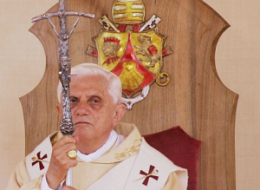
Just to reiterate. Why should anyone be surprised? All of these cases had to have gone through Cardinal Ratzinger, aka Pope Benedict XVI under John Paul II. He was head of the Congregation for the Doctrine of the Faith (re-branded Inquisition), and, was PJP2s gatekeeper and adviser. Watch the trailer for http://www
The Roman Catholic Church is hierarchical bureaucratic institution. As with all bureaucracies, it has a vested interest in its own survival. We know exactly how the "sexual abuse scandal" has come about. The cover-ups begin at the lowest bureaucratic levels. However, as with all bureaucracies, extensive records are kept. (Oh to get hold of those records!!) I have know of only one archbishop who said "the buck stops here": Archbishop Penny in Newfoundland, who took on the responsibilities for the cover-ups in Newfoundland and then resigned. Now to be fair, this means that Rome could deny that it knew anything about this. So Penny "manned up" and took the flak for the Church, and they let him.
Ratzinger came up through the ranks. There is absolutely no way that he did not participate in "cover-ups" in his parishes, etc. The s**t has finally hit the fan in Europe - it will be no different there than anywhere else in Catholicism. What happened in North America, happened in Europe and everywhere else. We just need to wait as the cases fall out of the trees. Ratzinger/Benedict truly believes in those "old-fashioned" values of Roman Catholicism and its theology. Check out Gregory the VII, Pope Innocent the 3rd & the Fourth Lateran Council, the Council of Trent, Vatican 1 and even Vatican 2, the J-P2's Humanae Vitae.
People seem to be so shocked at what's going on. However, basic history of Christianity would show that "so it was, so it is". The question should be "so it ever shall be?" History tells us that if there is some sort of Council held over this issue & reform is in the air, the solutions will never go to the heart of the problem. The Church has already begun to retrench into its past theologies that allowed this to happen in the first place. The Church has been covering up child sexual abuse since its inception - why change now? Again read Doyle, Sipe & Wall. Sex, Priests, and Secret Codes: The Catholic Church's 2,000-Year Paper Trail of Sexual Abuse.
If people would just take off their blinders, things might get better.
Read the Article at HuffingtonPost
Just to reiterate. Why should anyone be surprised? All of these cases had to have gone through Cardinal Ratzinger, aka Pope Benedict XVI under John Paul II. He was head of the Congregation for the Doctrine of the Faith (re-branded Inquisition), and, was PJP2s gatekeeper and adviser. Watch the trailer for http://www
The Roman Catholic Church is hierarchical bureaucratic institution. As with all bureaucracies, it has a vested interest in its own survival. We know exactly how the "sexual abuse scandal" has come about. The cover-ups begin at the lowest bureaucratic levels. However, as with all bureaucracies, extensive records are kept. (Oh to get hold of those records!!) I have know of only one archbishop who said "the buck stops here": Archbishop Penny in Newfoundland, who took on the responsibilities for the cover-ups in Newfoundland and then resigned. Now to be fair, this means that Rome could deny that it knew anything about this. So Penny "manned up" and took the flak for the Church, and they let him.
Ratzinger came up through the ranks. There is absolutely no way that he did not participate in "cover-ups" in his parishes, etc. The s**t has finally hit the fan in Europe - it will be no different there than anywhere else in Catholicism. What happened in North America, happened in Europe and everywhere else. We just need to wait as the cases fall out of the trees. Ratzinger/Benedict truly believes in those "old-fashioned" values of Roman Catholicism and its theology. Check out Gregory the VII, Pope Innocent the 3rd & the Fourth Lateran Council, the Council of Trent, Vatican 1 and even Vatican 2, the J-P2's Humanae Vitae.
People seem to be so shocked at what's going on. However, basic history of Christianity would show that "so it was, so it is". The question should be "so it ever shall be?" History tells us that if there is some sort of Council held over this issue & reform is in the air, the solutions will never go to the heart of the problem. The Church has already begun to retrench into its past theologies that allowed this to happen in the first place. The Church has been covering up child sexual abuse since its inception - why change now? Again read Doyle, Sipe & Wall. Sex, Priests, and Secret Codes: The Catholic Church's 2,000-Year Paper Trail of Sexual Abuse.
If people would just take off their blinders, things might get better.
Read the Article at HuffingtonPost
Subscribe to:
Posts (Atom)
Just in case you think this is just a Roman Catholic problem!
It isn't, not by a long shot. See this from the megachurch - Gateway Church in Texas (and even in Sault Ste. Marie ON?!) Texas megachu...